
OSHA Sanitation Standards: Restroom Requirements for Georgia Construction Sites
A comprehensive guide to OSHA 29 CFR 1926.51 sanitation standards for Georgia construction sites, covering toilet ratios, hand hygiene, servicing intervals, and climate considerations.
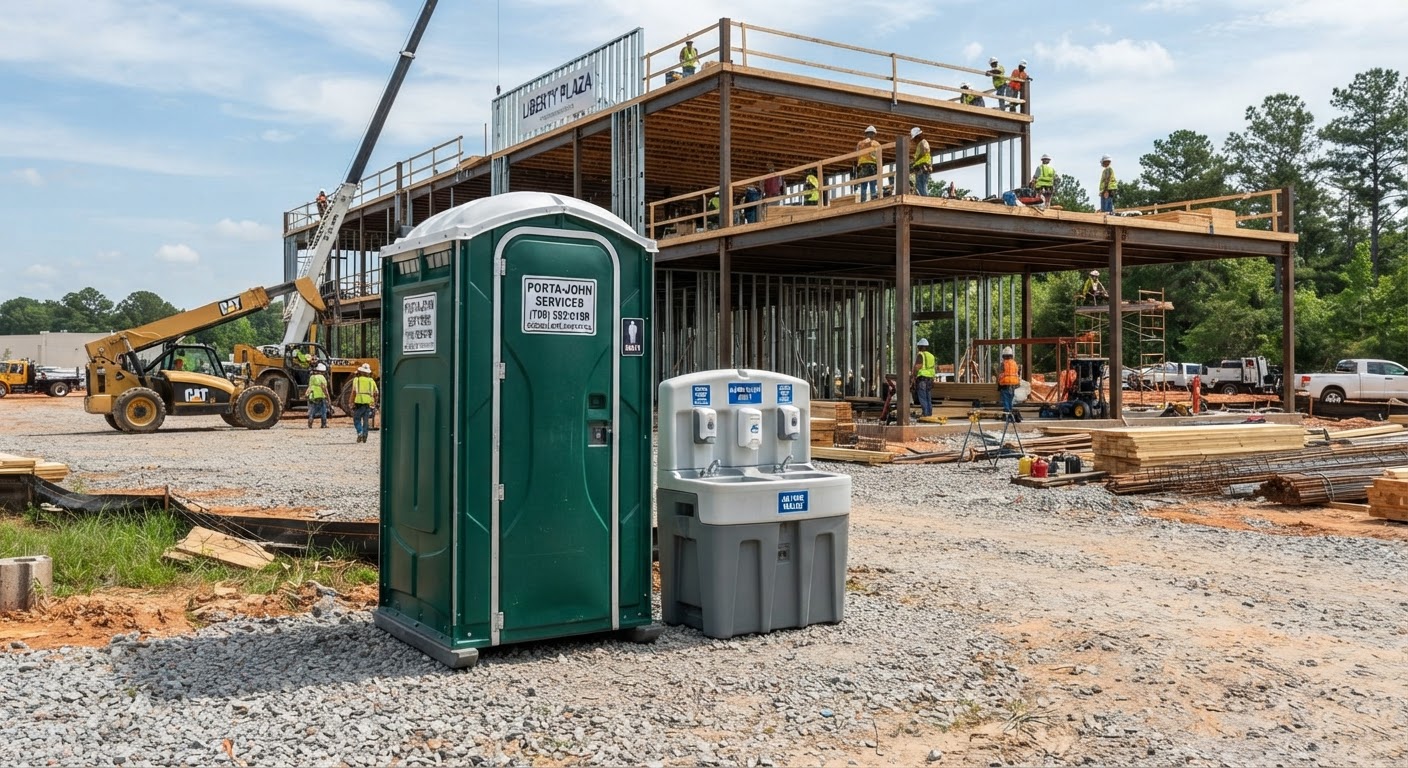
Understanding OSHA Sanitation Standards on the Job Site
Managing a safe and compliant construction project in Georgia requires attention to dozens of federal, state, and local regulations. Among the most fundamental—yet frequently overlooked—operational requirements are the sanitation mandates enforced by the Occupational Safety and Health Administration (OSHA). Specifically, standard 29 CFR 1926.51 outlines the baseline health and sanitation requirements for temporary job sites, focusing on drinking water, washing facilities, and toilet availability.
For general contractors, site managers, and safety directors working in Stockbridge and across the state of Georgia, adhering to these rules is not merely a formality. Maintaining compliant restroom facilities directly influences worker health, operational productivity, and legal liability. Non-compliance can lead to substantial OSHA fines, project stop-work orders, and avoidable public health risks among the trade crews on site.
OSHA Minimum Toilet Ratios: 29 CFR 1926.51(c)(2)
OSHA establishes clear, enforceable minimums regarding the number of toilet facilities that must be accessible on an active construction site. The specific requirements scale according to the total number of employees working on the site at any given time:
- 20 or fewer employees: A minimum of 1 toilet facility is required.
- 20 to 199 employees: A minimum of 1 toilet seat and 1 urinal per 40 workers.
- 200 or more employees: A minimum of 1 toilet seat and 1 urinal per 50 workers.
It is important to remember that these figures reflect absolute minimums under federal law. On dynamic construction projects where multiple trade contractors, delivery crews, and specialty subcontractors overlap, worker counts can surge unexpectedly. Savvy site superintendents often calculate their portable toilet needs based on peak crew sizes rather than baseline averages to ensure they stay on the correct side of federal regulations.
The Critical Role of Servicing, Sanitation, and Maintenance
Simply having the appropriate number of portable restrooms delivered to a site does not fulfill an employer's legal obligation under OSHA standards. The standard explicitly states that facilities must be maintained in a clean, sanitary, and functional condition at all times. A portable restroom that is full, unstocked, or unserviceable cannot be counted toward the site's required minimum toilet count.
To maintain compliance, site supervisors must establish a consistent cleaning and servicing schedule. Standard maintenance entails:
- Pumping the waste storage holding tanks before they reach maximum capacity.
- Thoroughly scrubbing and sanitizing all interior contact surfaces, including door handles, toilet seats, and latches.
- Replenishing toilet paper supplies using dedicated holders inside each stall.
- Treating holding tanks with fresh deodorizing and sanitizing solutions.
- Inspecting unit integrity, vents, screens, and latches to ensure proper ventilation and privacy.
On high-traffic construction sites, weekly servicing is generally the baseline requirement. However, larger projects or those with tight work schedules often require multi-week pumping and cleaning visits to keep facilities genuinely sanitary and acceptable under OSHA inspection guidelines.
Handwashing and Hygiene Requirements
Sanitation on the job site extends beyond waste containment. Workers must have access to proper hand-cleaning solutions to prevent the spread of biological hazards, toxic substances, and foodborne illnesses. OSHA standard 29 CFR 1926.51(f) requires employers to provide adequate washing facilities for employees engaged in operations where harmful contaminants may be present, such as painting, lead abatement, concrete work, or soil excavation.
Modern best practices on Georgia job sites include providing dedicated handwashing stations equipped with running water, soap, and single-use towels, or at minimum, high-grade hand sanitizer dispensers positioned immediately adjacent to every portable toilet cluster. When workers handle toxic substances, OSHA specifically prohibits waterless hand cleaners as a substitute for true running water and soap.
Accessibility, Travel Distance, and Placement
Under OSHA interpretation letters and enforcement directives, temporary restrooms must be readily accessible to employees. While the standard does not state an exact foot-by-foot maximum distance, the agency mandates that facilities must be located within an unobstructed, reasonable walking distance from active work areas.
Consider the following practical placement guidelines when setting up units on site:
- Level and Stable Ground: Restrooms must be placed on firm, dry ground that prevents tipping, even during heavy rainstorms.
- Service Truck Access: Placement must allow vacuum service trucks clear, unobstructed vehicular access within roughly 25 feet of the units.
- Vertical Job Sites: On multi-story commercial construction sites, OSHA inspectors evaluate travel time. If reaching a ground-floor restroom requires navigating multiple flights of stairs or waiting for temporary construction hoists, employers often need to stage portable toilets on designated upper floors.
- Security and Lighting: Units should be situated in well-lit, visible areas to deter vandalism and ensure personal safety during early morning or night shifts.
- ADA Accessibility: While private, non-public job sites operate under specific industrial rules, commercial sites frequently require American with Disabilities Act (ADA) compliant units to accommodate injured personnel, safety inspectors, or regulatory officials visiting the grounds.
Georgia Climate Considerations: Heat and Humidity
Operating a construction site in Georgia brings unique environmental challenges that directly impact sanitation logistics. The long, humid summers experienced in Stockbridge and the broader Atlanta metro area can rapidly accelerate biological decomposition within portable toilet holding tanks.
Extreme interior temperatures can deter workers from taking necessary biological breaks or encourage rapid, improper hand hygiene, increasing the risk of heat exhaustion and illness. To mitigate these local climate factors, project managers should:
- Position units in shaded areas whenever possible, avoiding direct all-day exposure to southern sun.
- Select portable restrooms with integrated rooftop ventilation screens to encourage continuous airflow.
- Increase pumping and chemical recharge frequencies during the peak summer months from June through September.
- Position drinking water stations in separate, clean areas away from restroom facilities to maintain strict sanitary separation.
Consequences of Non-Compliance
OSHA conducts both scheduled and unannounced inspections across Georgia construction sites. Routine safety audits routinely inspect sanitation conditions. Citations for sanitation violations are classified as serious when unhygienic conditions present clear health risks to workers. In addition to direct monetary fines, failure to provide adequate, clean restrooms can result in formal union grievances, increased worker turnover, and decreased overall project morale.
Providing clean, well-maintained portable restrooms is one of the clearest demonstrations of respect for trade professionals on the ground. When crews have reliable access to clean facilities, site productivity remains high, and operations proceed without regulatory interference.
Planning Your Site Sanitation with Citywide Portable Toilet Rentals
Meeting OSHA sanitation requirements does not have to complicate your project timeline. Citywide Portable Toilet Rentals provides dependable construction site portable toilet rentals, dedicated handwashing stations, and scheduled cleaning and maintenance services for job sites throughout Stockbridge, Georgia. Contact our team today to evaluate your crew size, plan your delivery schedule, and keep your site safe, clean, and fully compliant with all OSHA standards.
Need help from Citywide Portable Toilet Rentals?
Contact our team to discuss your service needs in Stockbridge and surrounding service areas.